

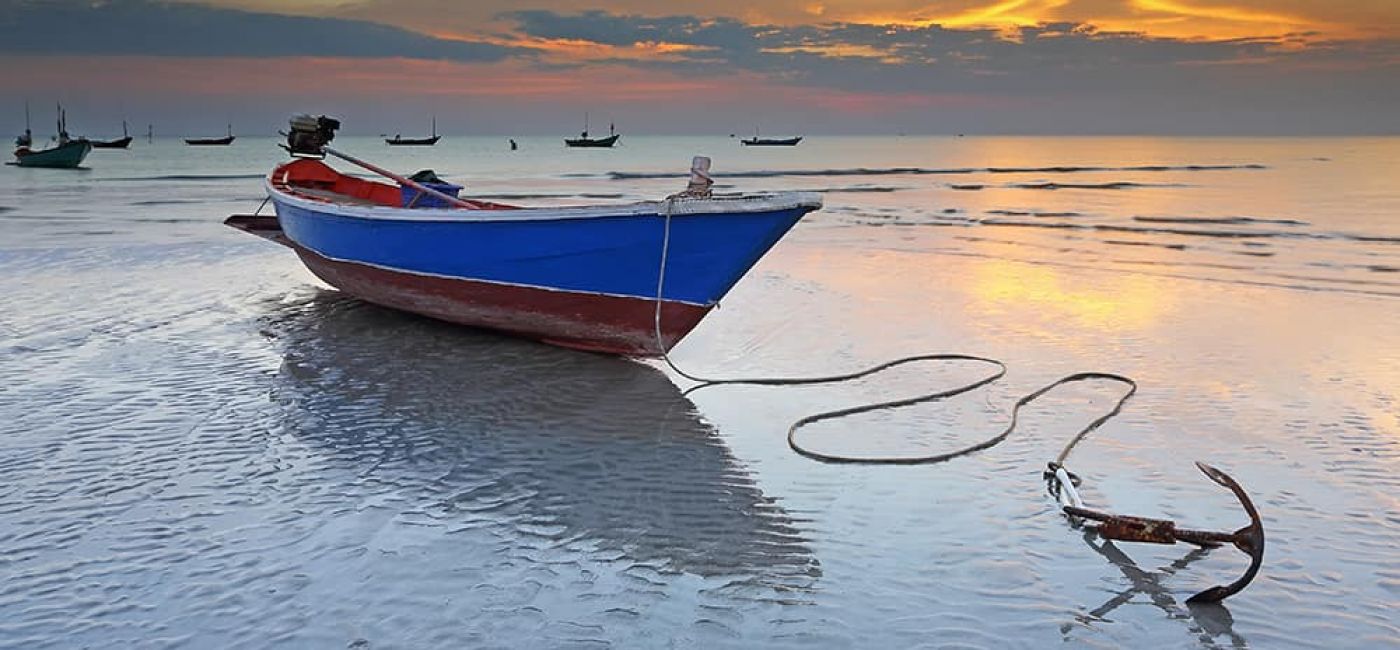
One of the manoeuvres that requires most attention, together with port manoeuvres, is anchoring. In order to anchor well, a series of conditions must be met, which we are going to remind you of. There is a general lack of knowledge when it comes to anchoring: the use of small anchors, too little chain, miscalculating the bollard circle, poor choice of the anchor, etc. All of this has a negative effect on the manoeuvre.
Anchoring is not just a matter of dropping anchor. It is necessary to analyse the situation and take into account several factors that can affect the before and after manoeuvre. What factors are involved in anchoring? There are two factors, one is external, such as the boat, the bottom or anchorages, waves and current, and the strength of the wind. The other factor is internal, i.e. anchors, anchor line, ropes and fittings.
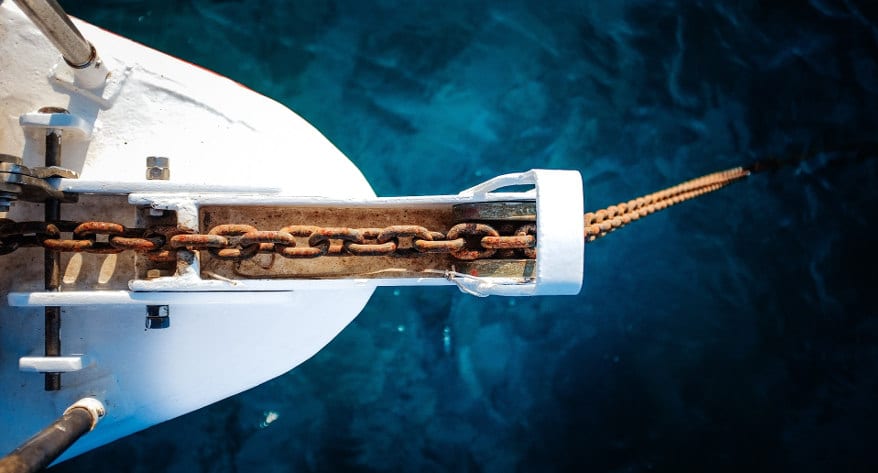
We are going to analyse the factors that directly intervene and that we have to take into account in the anchoring manoeuvre:
Backgrounds or tenederos: there are several and each with its own characteristics. There are several ways to find out what kind of bottom we have. If we are at a shallow depth and the light allows it, we can see it directly, use a scanning device, use a depth sounder and lastly, the most convenient way is to consult a nautical chart or a route planner. When choosing the anchorage, we must rule out rocky bottoms due to the high risk of it being anchored or locked in such a way that it does not come out.Seaweed bottoms have little consistency, making it difficult to grab. If the anchor grabs, the seaweed will get tangled in the anchor's nails, making it almost completely ineffective, so be wary of the anchor. Clay bottoms are not very good as the anchor has a tendency to move around, especially if the wind is blowing and with the rise and fall of the tides. The best bottoms are sand and mud because they behave as if they were solid, offering great resistance.
- Anchors: when the anchor is dropped, it travels a few metres before sinking to the bottom. Otherwise, if you continue dragging the anchor, it will drag. A successful manoeuvre depends on the right choice of anchor. The market offers a wide variety of anchors, among the most outstanding ones we find:
- Admiralty whose grip is weight-dependent and very regular for all types of bottoms.
- A very typical fisherman's grapnel, it consists of four thin arms that pierce the seaweed mats very well to the bottom and, if reeled in, allow for easy release.
- Arado, one of the best for all types of anchoring except rocks and seaweed.
- Danforth, light and very grippy for all types of bottom except rock and gravel. The minimum number of anchors to be carried on board shall be two. The anchor shall be well stowed for quick access and out of the way.
Anchor line: chain or rope? It all depends on the type of boat. A dinghy does not require much thought. Due to its dimensions, it will be sufficient for the anchor to be tied to a nylon line. Everything changes when it comes to a yacht or cruising sailboat. The use of chain will develop its maximum holding power when it sinks due to its weight. Chain offers a number of advantages over rope (the weight improves traction, it stows itself, it does not suffer wear from friction, abrasion or UV rays and the bore radius is smaller).
Once we have analysed the factors that we have to take into account in the anchoring manoeuvre, we are going to give a series of tips to make anchoring easier and safer:
- When arriving at the anchorage, check whether there is enough space to tack without hitting other boats.
- Check the type of background or tenedero on the charts.
- Bring the anchor to the pendulum by reducing speed to avoid hitting the hull.
- With the boat stopped, let the chain run until the anchor is in the anchor lock. We will progressively reef the chain and we will use the engine to feel that the anchor has been set.
- We will not limit ourselves to the established metres depending on the type of anchor line. It is advisable to lay a little more chain to avoid snagging, taking into account the bore radius.
- Use of the orinque and signposting both day and night.
- Use a rope or line to attach the chain to a cleat or cleat to prevent jerking.
- Activate anti-jamming alerts for electronic devices. If not available, with a delay timer, take markings and make periodic checks.
- On sailboats with a mizzen, hoisting the mizzen will help to keep the boat more stable and upwind.
- Take into account the high and low tide to calculate the metres of chain to be strung.
- If the weather is bad, set up on-call duty and if necessary leave the engine running.
- To raise the anchor, give forward to turn the chain vertically to prevent the windlass from working under tension.



Our Brands


Náutica Santa Eulalia is a Spanish company founded in 1990 that offers charter services, mooring rental, exhibition and sale of boats, sale of spare parts, workshop and storage.
Company
Contact
-
This email address is being protected from spambots. You need JavaScript enabled to view it.